I build autonomous systems that have to work in the real world, not just in simulation. At Cal Poly Pomona I have led teams, shipped real hardware, and learned that good engineering is as much about clear communication as it is about clean code. I am looking for a team that takes both seriously.
I am drawn to autonomous systems that have to perform in the physical world: ground vehicles, UAVs, and subsea platforms. That focus shaped everything from the courses I took to the research I pursued and the teams I joined.
What makes me different from most new grads is not just the technical work. I have been leading people and owning responsibilities outside the classroom for years. I was promoted to shift lead at my job after a year, and I have been running AV systems for a live audience at my church every week since 2021.
I am looking for a team where I can contribute from day one, learn from engineers who have been doing this longer than I have, and build things that actually have to work.
Changwe Musonda
M.S Electrical Engineering, California Polytechnic University, Pomona Fall '27 (Expected)
My path to Cal Poly Pomona started at Crafton Hills College, where I built the mathematical foundation that now underlies everything I build. Moving on was a decision I made deliberately. I wanted to work on real hardware with real teams.
The Associate of Science in Mathematics did more than teach me calculus. It gave me the analytical framework I carry into every system I design. Earning a STEM Scholarship while there confirmed I was on the right track, and transferring taught me that long-term goals require deliberate planning and follow-through.
The Computer Engineering program at California State Polytechnic University, Pomona is built around applied work, not just theory. I have worked on real hardware, in real labs, with real stakes. The most visible example is my work as Autonomy Lead on Team Pegasus, a Lockheed Martin-sponsored capstone building a UAV autonomy system for a 110 lb eVTOL platform. Maintaining a 3.59 GPA alongside that kind of project load is something I am genuinely proud of.
As I continue my education at California State Polytechnic University, Pomona, I am pursuing a Master of Science in Electrical Engineering with a focus on embedded systems and control theory.
Engineering is about more than technical skill. It is about showing up consistently, adapting under pressure, and making the people around you better. Every role here has shaped how I approach that.
I teach K-12 students robotics and coding fundamentals through iCode's hands-on, belt-system STEM curriculum, covering robotics kits, drones, and introductory programming concepts. A lot of the work is translation: taking real-world robotics and embedded systems concepts from my own coursework and research and turning them into age-appropriate, hands-on lessons that build students' technical and problem-solving skills.
I serve as an embedded systems engineer on the integration team for the campus Northrop Grumman Collaboration Project, tasked with unifying independently developed autonomy, ground control station (GCS), and RF subsystems into a shared ROS architecture. Most of the work is coordination as much as code: aligning interface and data-format standards across sub-teams so subsystems built in isolation can actually talk to each other within ROS.
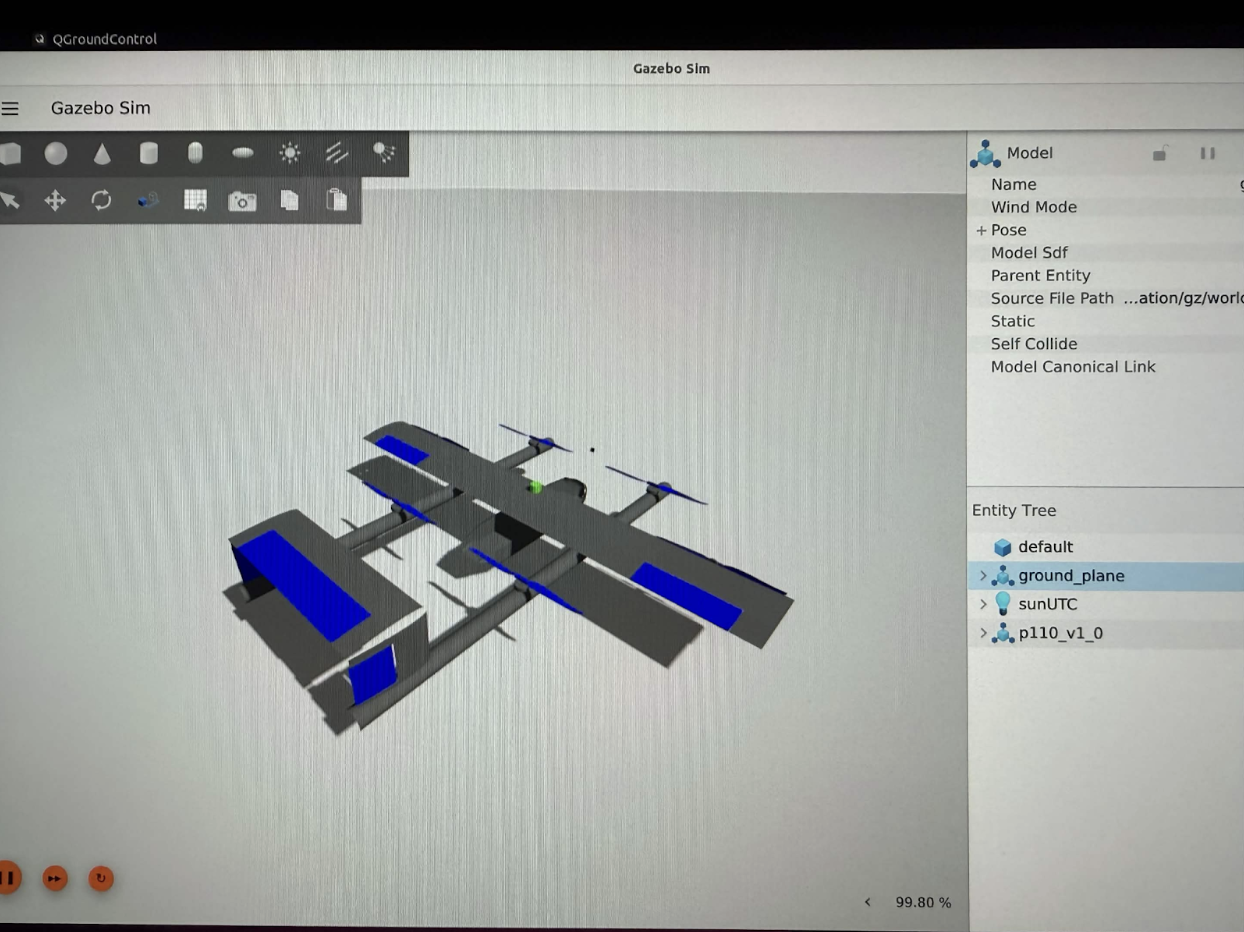
I joined Team Pegasus in January 2025 as an Autonomy Engineer on a Lockheed Martin-sponsored research project building an end-to-end autonomy stack for a UAV. As the project matured and I took on the Autonomy Lead role, I chose to carry it forward as my senior capstone. Leading a team of seven engineers, I designed and integrated an end-to-end UAV autonomy system in C++ and Python on ARM-based embedded Linux (Jetson AGX), progressing from Gazebo SITL simulation through hardware-in-the-loop testing to outdoor field deployment. I bridged the PX4 flight controller to ROS 2 via uXRCE-DDS and integrated LiDAR and ZED X stereo cameras (including GMSL bring-up) into a unified perception pipeline supporting SLAM-based localization and closed-loop control. When hardware-software integration failures surfaced during flight testing, I dug into telemetry logs, traced faults across firmware, OS-level timing, and application software, and resolved them to improve reliability from lab through outdoor flight test.
I lead LiDAR sensor integration for the lab's autonomy stack, designing an STM32-based hardware time-synchronization module that timestamps IMU and LiDAR data against a shared GPS/PPS reference for deterministic sensor fusion. That module feeds an RTOS task pipeline (interrupt-driven PPS capture → sensor read → buffered output) into a custom ROS 2 node that time-aligns IMU and Velodyne VLP-16 point cloud data for downstream perception and SLAM. I also coordinate with the broader autonomy team to identify and scope real-time sensor-sync gaps in the existing perception pipeline, translating them into firmware-level solutions.
I started at Panda Express as a front-of-house crew member and was promoted to shift lead within a year, not because I asked for it, but because I had demonstrated I could keep a team on track during the high-volume hours when everything is moving at once and the margin for error is low. As shift lead I manage the crew, keep quality consistent under pressure, and make real-time decisions that affect how the whole shift runs. The parallels to engineering coordination are more direct than they sound: when a system is under load and something breaks, you have to prioritize fast, communicate clearly, and execute without losing the thread. This job made that second nature in a way that school could not.
As a student worker in the Counseling Department at Crafton Hills College, I supported the front office of academic counseling: greeting and checking in students, scheduling appointments with counselors, and answering first-line questions about course sequencing, general education patterns, prerequisites, and transfer requirements to CSU and UC schools. Academic counselor student workers act as the connective tissue between students and the counseling staff, they help students read their degree audits and educational plans, process routine paperwork like add/drop forms and petitions, and route anything that needs real academic judgment to a credentialed counselor, all while handling student records carefully under FERPA confidentiality rules. A lot of the job was translating a dense, rule-bound system, transfer agreements, prerequisite chains, GE requirements, into something a stressed student could actually act on that day. That skill, taking a complicated system and making it legible to the person who has to use it, is one I still lean on directly in engineering work.
Since 2021 I have owned live AV operations (audio mixing, video switching, and streaming) for a weekly service with a live audience. There is no margin for error in live production: if something goes wrong, it goes wrong in front of everyone, in real time. Over four years of consistent weekly commitment I have built the kind of trust that only comes from showing up and getting it right, week after week. That experience sits directly behind how I think about reliability in engineering. It is not a property you verify in testing but something you have to build into your process from the start.
These are the projects where the learning became real. These projects are split between academic and research. Some are completed and others are ongoing, and all of them required me to figure things out under constraints.
Electrical/embedded lead on a sub-$5K manually controlled surgical robot, secured through competitive Cal Poly Pomona Project Hatchery funding and advised by Dr. Dan Gonzalez (25+ years of Design/Quality Engineering at J&J). I am designing impedance-sensing tip electronics, front-end signal conditioning, and firmware for real-time tissue contact detection, and building ROS 2 data handoff and hardware fail-safes aligned with IEC 60601/62304 medical device standards. I am collaborating closely with an ME counterpart to integrate sensor electronics with the end-effector design from the ground up.
A real-time CAN motor-controller bridge for an IGVC-style autonomous ground robot's differential drivetrain, ported from a Teensy 4.1/Arduino sketch to a bare-metal STM32F767ZI (NUCLEO-F767ZI). I rewrote the firmware in C against the STM32 HAL while preserving the host-facing UART protocol byte-for-byte, and reimplemented the REV SparkMAX CAN protocol layer from scratch, extended-ID frame construction, heartbeats, velocity/duty commands, encoder decode, and PID parameter writes, over a hand-configured 1 Mbit/s bxCAN bus running a 50 Hz control loop with a 300 ms host watchdog and a non-blocking, safety-critical timing state machine. I also replaced a bit-banged NeoPixel driver with a DMA-driven WS2812 implementation (TIM1 PWM + DMA), eliminating a ~480 microsecond interrupt blackout present in the original firmware, with zero changes required to the existing ROS 2 host software.
An AI-powered case management tool built for the Cal Poly Pomona AI Hackathon 2026, where our team reached the finals. CaseBridge targets the administrative overhead that consumes 60–70% of a social worker's day: an AI scribe converts session transcripts into structured case notes, a resource-matching tool connects clients to community services, and a form-filler auto-populates referral documents from existing case data. Built with React, Vite, Tailwind CSS, and the Anthropic Claude API.
An extension of a CVPR 2022 paper on differentiable planning for egocentric navigation. I trained and benchmarked four planning architectures (VIN, GPPN, CALVINConv2d, and CALVINConv3d) on custom egocentric and allocentric datasets to evaluate cross-dataset generalization. Along the way I modernized a legacy PyTorch research codebase, resolving GPU/CPU tensor handling and CUDA dependency issues to establish a reproducible ML experiment pipeline.
A fully functional chess engine built in C as part of a 5-person team, managed with Jira and Git, communicating over the UCI protocol for plug-in compatibility with any standard chess GUI. I helped implement alpha-beta search with negamax, quiescence search, and a 1M-entry Zobrist-hashed transposition table (~32 MB), and applied iterative deepening and move ordering heuristics to improve pruning efficiency.
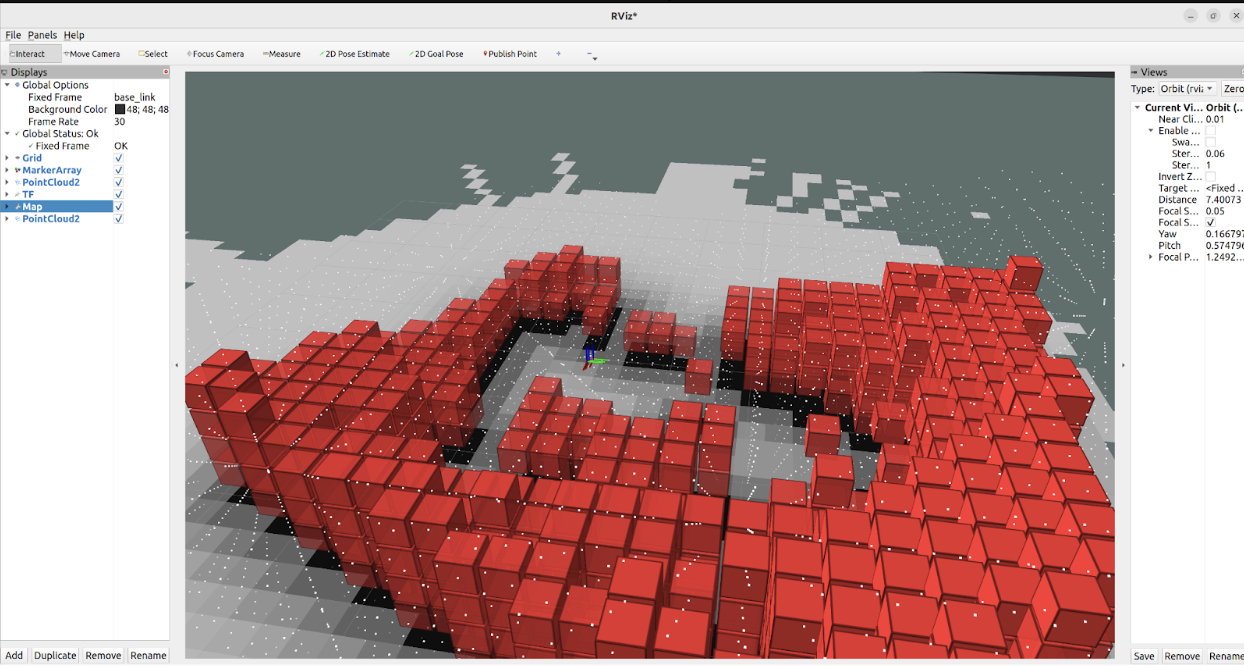
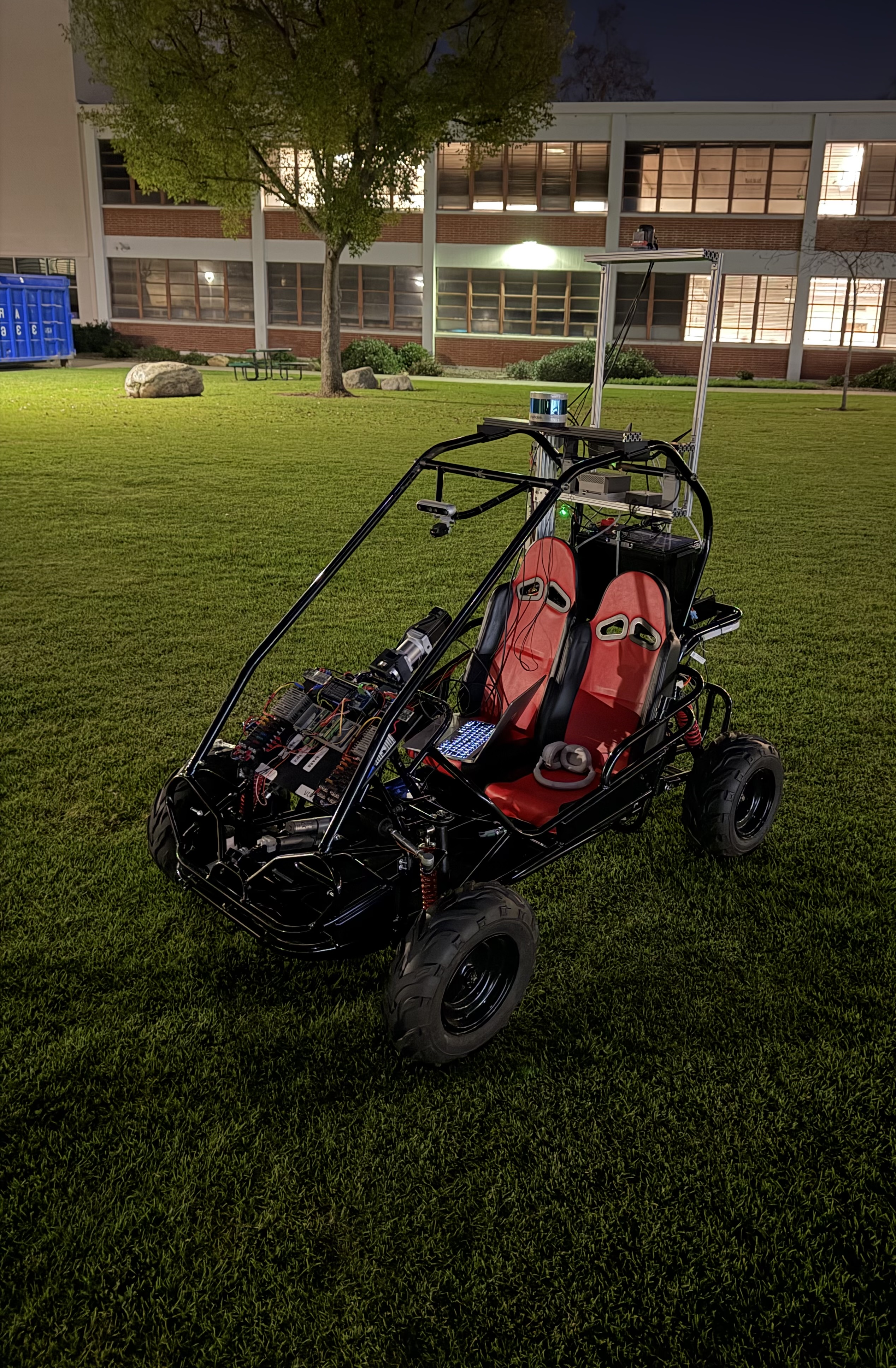
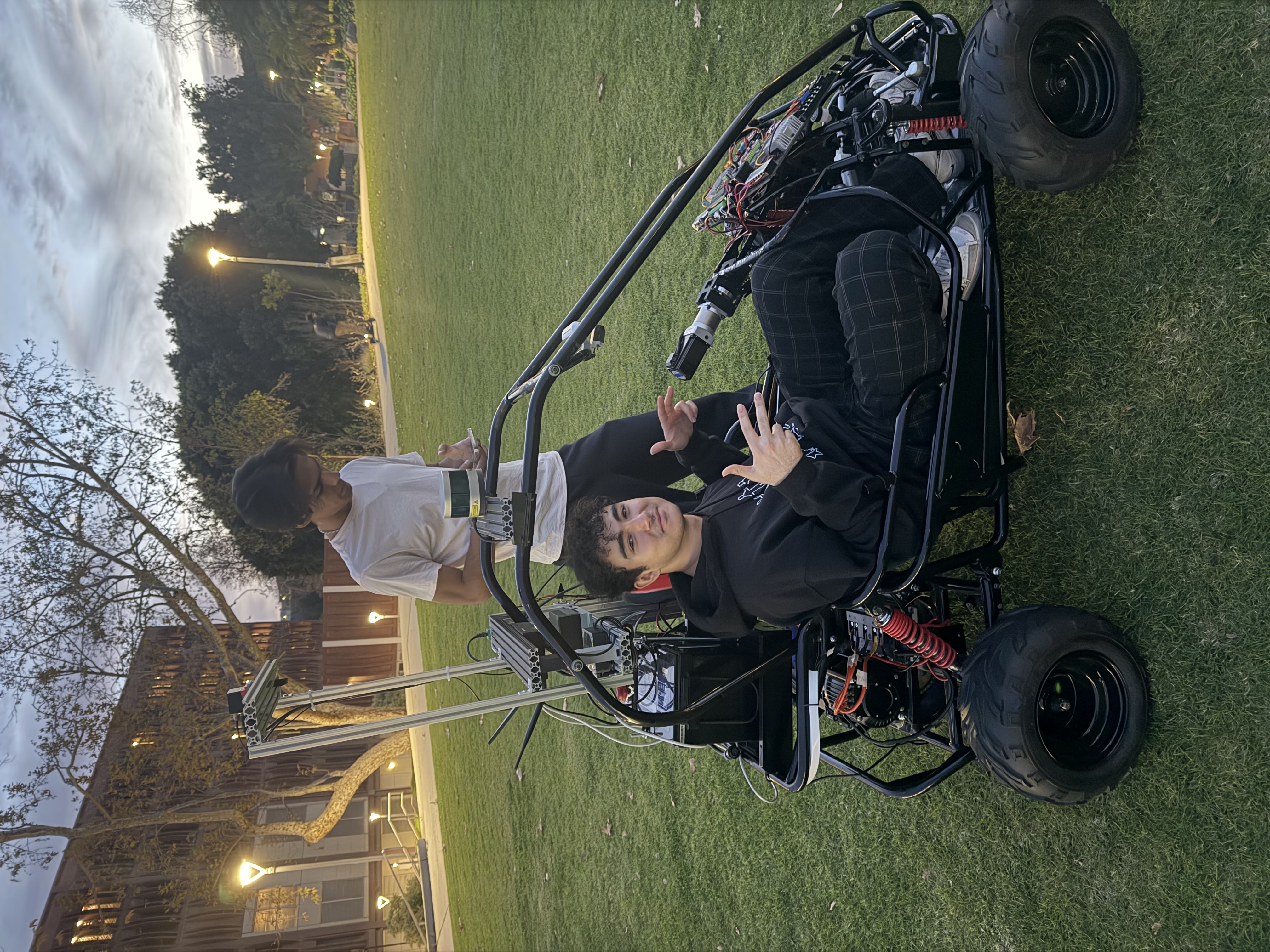
A ROS 2-based SLAM pipeline integrating mapping and localization for autonomous navigation in unstructured outdoor environments, built at the Cal Poly Pomona Autonomous Vehicle Laboratory. I improved localization robustness by analyzing failure cases under sensor noise and environmental variation, refining pipeline parameters through iterative field testing.
A PyTorch-based segmentation pipeline for cardiac MRI data. I built reproducible training workflows from the ground up and improved segmentation consistency through preprocessing decisions and metric-driven evaluation. The project deepened my understanding of how model architecture choices interact with data quality, and how much of machine learning is really careful data engineering.
A hardware-accelerated implementation of the A* path planning algorithm in Verilog on an FPGA, with a Python interface for validation. I designed the hardware logic for parallel execution and validated performance against Python reference models across multiple test scenarios. The project required reasoning about timing constraints, resource utilization, and the gap between algorithmic logic and hardware reality.
Here is an honest picture of where I am technically. I split this deliberately. I would rather show you what I can contribute on day one and what I am actively building toward.